

William Sloane: An Unsung Master of Horror
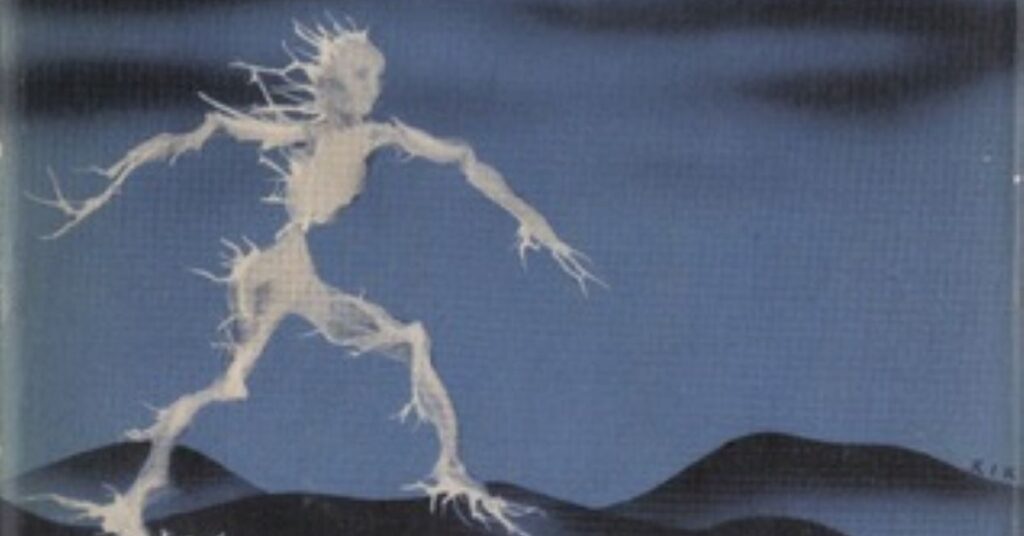
Nearly a decade ago, my wife and I were enjoying an off-season autumn vacation in storied Asbury Park, New Jersey. In my bag lay The Rim of Morning: Two Tales of Cosmic Horror by William Sloane. This book is a compendium of Sloane’s only two novels, To Walk the Night (1937) and The Edge of Running Water (1939). Originally published in 1964, The Rim of Morning was reissued by New York Review of Books in 2015. Being a lifelong reader of H. P. Lovecraft, the publication’s subtitle drew my attention when I first spotted it in a bookstore. How had I never heard of this writer before? By the end of our trip, I eagerly had filled this gap in my reading knowledge.
Sloane’s pair of remarkable novels straddle the line between horror and science fiction, arguably fitting the definition of weird fiction constructed by the genre’s most accomplished and masterful practitioner, H. P. Lovecraft himself. Interesting enough, a fan writing to Sloane in the late 1960s described how Sloane’s fiction “arouse[d] … a quite Lovecraftian mood of awe, puzzlement and also cosmic dread.”
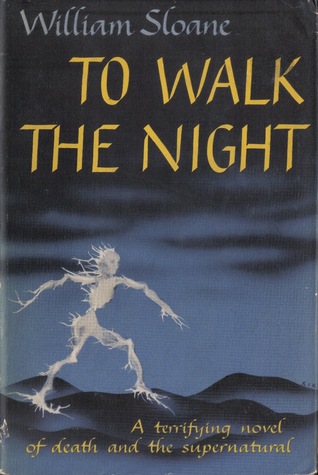
To Walk the Night begins with narrator Berkeley Jones recounting the suicide of his friend, Jerry Lister. Several years earlier, the two friends decided to call upon a favorite professor after attending a football game at the their college alma mater. Instead of sharing a conversation about the professor’s latest research or telling him about their adult lives, they discovered their mentor aflame in the campus astronomy lab. Lister soon became romantically involved with the professor’s widow, a beautiful, yet remarkably strange woman named Selena. After marrying Selena and relocated to the Southwest, Lister realized something was very wrong with his bride. To Walk the Night carries an eerie, haunting atmosphere and explores friendship, sexual tension, possession, and dark knowledge. One might describe it as a Lovecraftian novel, if Lovecraft was interested in human relationships.

The Edge of Running Water stands as an equal successor in capturing a similarly unsettling mood and blending together science and the supernatural. After receiving a letter from an old friend, psychiatrist Richard Sayles travels to a remote corner of Maine. His friend electro-physicist Julian Blair retreated to this rural pocket following the death of his wife. Sayles discovers that Blair has embarked upon a secret experiment attempting to breach the boundary between our corporeal world and the realm possibly beyond. The Edge of Running Water delves into the constant quest to prove that life exists after death and the danger inherent when such a metaphysical query becomes an all-consuming obsession.
Sloane never penned another word of fiction following these two remarkable novels. Why? This question prodded me to delve into his biography. When I learned that the Firestone Library at Princeton University held his personal papers, I knew that I needed to plan a trip the archives. For various reasons, this finally occurred late last year in November 2024.
William Sloane dedicated his life to books and ideas. Born in Plymouth, Massachusetts, in 1906 into a family of “ministers, teachers, and professional people,” William Sloane graduated from Princeton University in 1929. In the 1930s, he tried his hand at playwriting, contributed book reviews to various periodicals, and wrote the aforementioned pair of novels. During this period, he also worked in a series of successive positions in various publishing houses, most notably Henry Holt and Company.
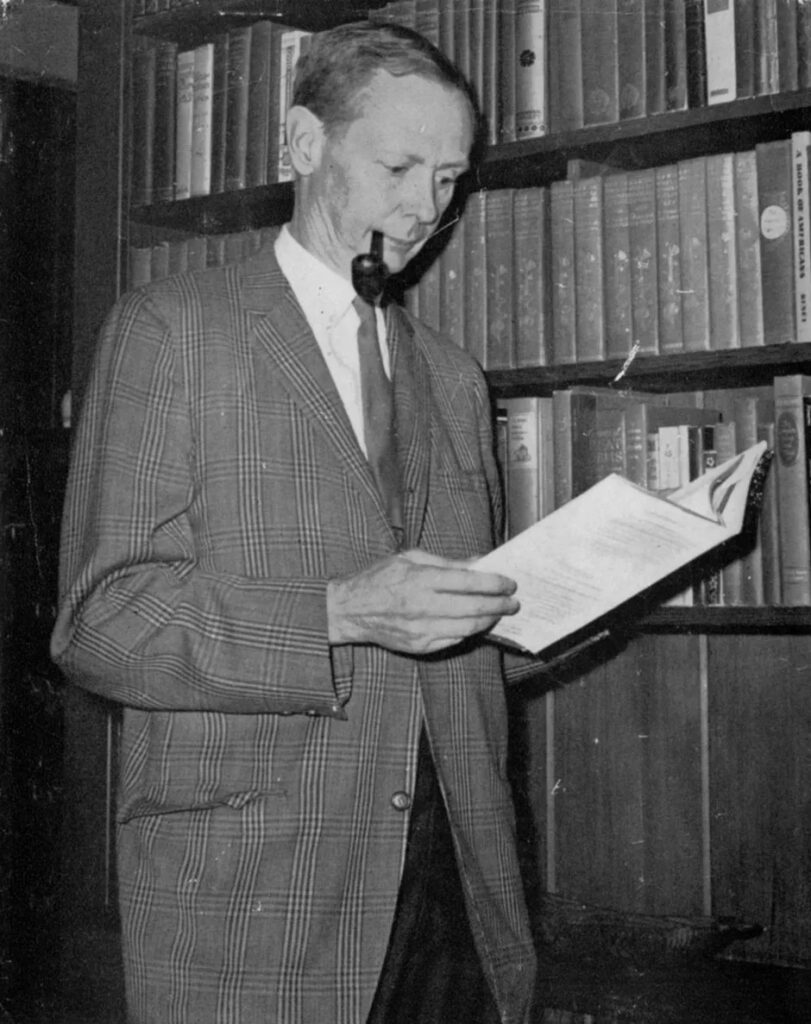
When the United States entered the Second World War, Sloane set aside his personal literary ambitions to participate in the war effort in several capacities. These activities included his involvement in the Council on Books in Wartime, a fact-finding trip to China at the partial behest of the Office of War Information, and a survey of the German publishing industry for the United States Army in the years immediately following the war.
In 1946, Sloane left Holt and Company to found his own publishing firm, William Sloane Associates. He also served on the staff of the annual Middlebury Bread Loaf Writers’ Conference. After his own business folded in 1952, he eventually settled into his final position in the publishing field as director of Rutgers University Press. Sloane died in 1974 in New City, New York.
My visit to the archives did not reveal any dark secrets and or eye-popping revelations. However, the pleasurable time shifting through manuscripts, letters, unpublished writings, and ephemera provided further insights into Sloane as an author and intellectual. Although his vocation as a writer largely ceased with the beginning of his war contributions, his novels continued to attract the attention of readers and Hollywood throughout the remainder of his life. For instance, both Lauren Bacall and Lillian Gish expressed interest in adapting To Walk the Night in the 1960s. (Sloane had sold the rights in the 1950s to funds his daughter’s upcoming wedding.) The archives hold numerous letters from fans to Sloane, glowingly recounting their discovery of the imaginative world portrayed in his books.
Sloane’s career intersected with other figures notable in the world of genre fiction and film. In 1947, Sloane only possessed a single copy of To Walk the Night. Artist and writer Howard Wandrei, a correspondent of H. P. Lovecraft and the brother of Arkham House Publishers co-founder Donald Wandrei, wrote to Sloane to offer him a copy of the book which Sloane had loaned to him years earlier. This copy of To Walk the Night “appear[ed] to be in the same shape” when Sloane originally lent it to Wandrei. Forrest J. Ackerman, the editor of Famous Monsters of Filmland, served as Sloane’s agent and negotiated foreign translation rights of Sloane’s novels in the early 1960s.
An almost infinite amount of quality authors stands outside of the canon–more than any single person can enjoy throughout a reading life. William Sloane ranks as one such writer. As the autumn approaches, The Rim of Morning might be the perfect volume to keep you company on a dark night.
All quoted material from the William M. Sloane Papers, 1931-1979, Special Collections, Firestone Library, Princeton University.